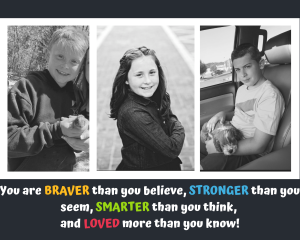

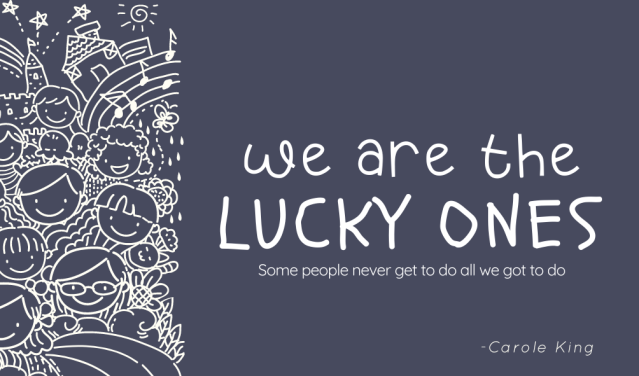
One day, when my children are older and can look back on their journey at The Morris Center, they will both believe this truth: WE ARE THE LUCKY ONES……
It’s true. They are the lucky ones, the lucky few. We’ve found a solution to their learning struggles and they’ve received the treatment necessary to rectify these weaknesses. Academically, the years ahead of them will now look different. Instead of starting behind their peers, they can confidently line up beside them, capable of learning the same. They are the lucky ones.
But what about the other kids with learning disabilities? The not-so-lucky ones? You see, some of these others aren’t just unknown faces to me. I know them. I know their families. They are within my own extended family. We’ve shared the same concerns and fears, while encouraging and supporting each other along the way. They’ve followed our journey here at The Morris Center and they’ve sincerely celebrated our progress. Knowing they are cheering us on back home should make me feel good. But in all honesty, it’s been a mixed bag. With every encouraging comment, I feel a pang of sadness for them. Not pity. More like a touch of survivor’s guilt. Why are my kids getting what they need, while their kids are facing another year of struggle and frustration? I empathize with these parents who are ready to throw their hands in the air. They are tired of seeing their kids struggle to keep up. I would have to think it’s a double-edged sword for them to be happy for my kids while at the same time, wishing their own kids were having similar outcomes. I’ve thought about each of those kids so much, wishing they could be here to receive this intervention. They deserve it just as much as my kids do. All kids do.
If the statistic is correct (1 in 5 with dyslexia), there’s a staggering number of kids out there struggling unnecessarily. Take our school for example…. our district serves over 3,500 kids. If dyslexia affects one in five people, that means 700 kids could have dyslexia. 700! In one school district. 700 who will always have to work harder than their peers and still might not close the gap of learning. It doesn’t have to be this way!!! There’s a solution and it’s within reach. My prayer as we return home is to see The Morris Center grow in recognition as a REAL solution for so many that struggle to read. There are now 6 children within our district who have been to TMC, with more attending in the months ahead. If these kids are all reaching higher potential than ever before, doesn’t TMC deserve a closer look? I believe it does and feel a responsibility to other families to share our journey and to offer hope for those who feel hopeless. To read more about why I believe The Morris Center program should be integrated into the education system, read my blog post Every Child Deserves It.
Cannon and Avery are now a few of the Lucky Ones. But learning to read and reach your full learning potential shouldn’t be just for the “lucky ones.” It should be for ALL.
 I’ve spent a lot of time over the last week thinking about The Morris Center and the impact it has had on so many. So many, yet not nearly enough. It’s tragic when you think about it really. Dyslexia affects 1 in 5 people. Older generations of people may not even be aware that they have it. They’ve probably always just thought, “school was hard for me.” Thankfully, with time and with science, we have a better understanding of how the brain works and how to recognize inefficiencies, then provide intervention for those learning challenges. For dyslexia, there are countless intervention programs available. State education departments and school districts are inundated with different programs claiming to be the best way to help kids with learning disabilities. So how do they decide on one? How do they choose one program over another? I know that education is always evolving and new teaching strategies are important. But, which one truly is the best?

 Disabling Dyslexia